🇲🇽 Mexico · Temple complex
Malinalco Archaeological Zone
Aztec Late Postclassic 1476–1501 CE · Aztec (Mexica)
Rock-cut Cuauhcalli temple 1501 CE, eagle-warrior initiation.
Search places, or jump to a section
The catalogue
30 places to sift through. Narrow by kind, country, period or how firmly each one is established — contested and pseudoarchaeological claims are labelled here, never hidden.
🇲🇽 Mexico · Temple complex
Aztec Late Postclassic 1476–1501 CE · Aztec (Mexica)
Rock-cut Cuauhcalli temple 1501 CE, eagle-warrior initiation.
🇲🇽 Mexico · Archaeological wonder
Multi-period (4000 BCE–1000 CE) · Multi-period
Paquime Casas Grandes Ball Court East in Chihuahua, Casas Grandes, Mexico is a Multi-period (4000 BCE–1000 CE) archaeological wonder attributed to Multi-period.
🇲🇽 Mexico · Ancient city
Early Classic to Epiclassic 600–1200 CE (apogee 800–1150, Veracruz Central tradition) · Classic Veracruz / Totonac (Gulf Coast, central Veracruz cultural tradition)
Classic Veracruz capital (600–1200 CE) famed for Pyramid of the Niches (365 niches – one per solar day – 18 m high with 365 + 7 step symbolism, seven-storey enclave temple), 17 ballcourts (most of…
🇲🇽 Mexico · Archaeological wonder
Early Bronze Age (3000–2000 BCE) · Iron Age
Etched Mesa Petroglyph North in Oaxaca, Mexico is a Early Bronze Age (3000–2000 BCE) archaeological wonder attributed to Iron Age culture.
🇲🇽 Mexico · Geoglyph
Late Archaic to Trincheras (Amargosa–Hohokam interface) · Trincheras / Hohokam desert–Tohono O'odham continuity
17 Gran Desierto hill intaglios (300 BCE–1400 CE) on Pinacate cerro islands — Tohono O'odham salt pilgrimage.
🇲🇽 Mexico · Ancient city
Formative to Classic 500 BCE–850 CE (Monte Albán I–V; apogee IIIa 250–500 CE, IIIb–IV 500–850) · Zapotec (Beni Zaa); later Mixtec reuse
Zapotec capital on artificially levelled 400 m hilltop (6 km²) commanding Oaxaca Valley confluence: Main Plaza (300×150 m), South and North Platforms, Pyramid of the Dancers (Temple I) with Danzantes…
🇲🇽 Mexico · Ancient city
Early Postclassic 850–1160 CE (Tollan apogee 950–1150) · Toltec (Tolteca-Chichimeca, Nahua-affiliated)
Capital of Toltec Empire (Tollan, 950–1160 CE) spanning 16 km² on Malinche Hill: Pyramid B (Temple of the Morning Star) crowned by four 4.6 m basalt Atlante warrior columns on coatepantli (serpent…
🇲🇽 Mexico · Temple complex
Late Classic to Postclassic Maya (9th–12th c. CE; Toltec-Maya fusion) · Maya (Itza) with Toltec influence
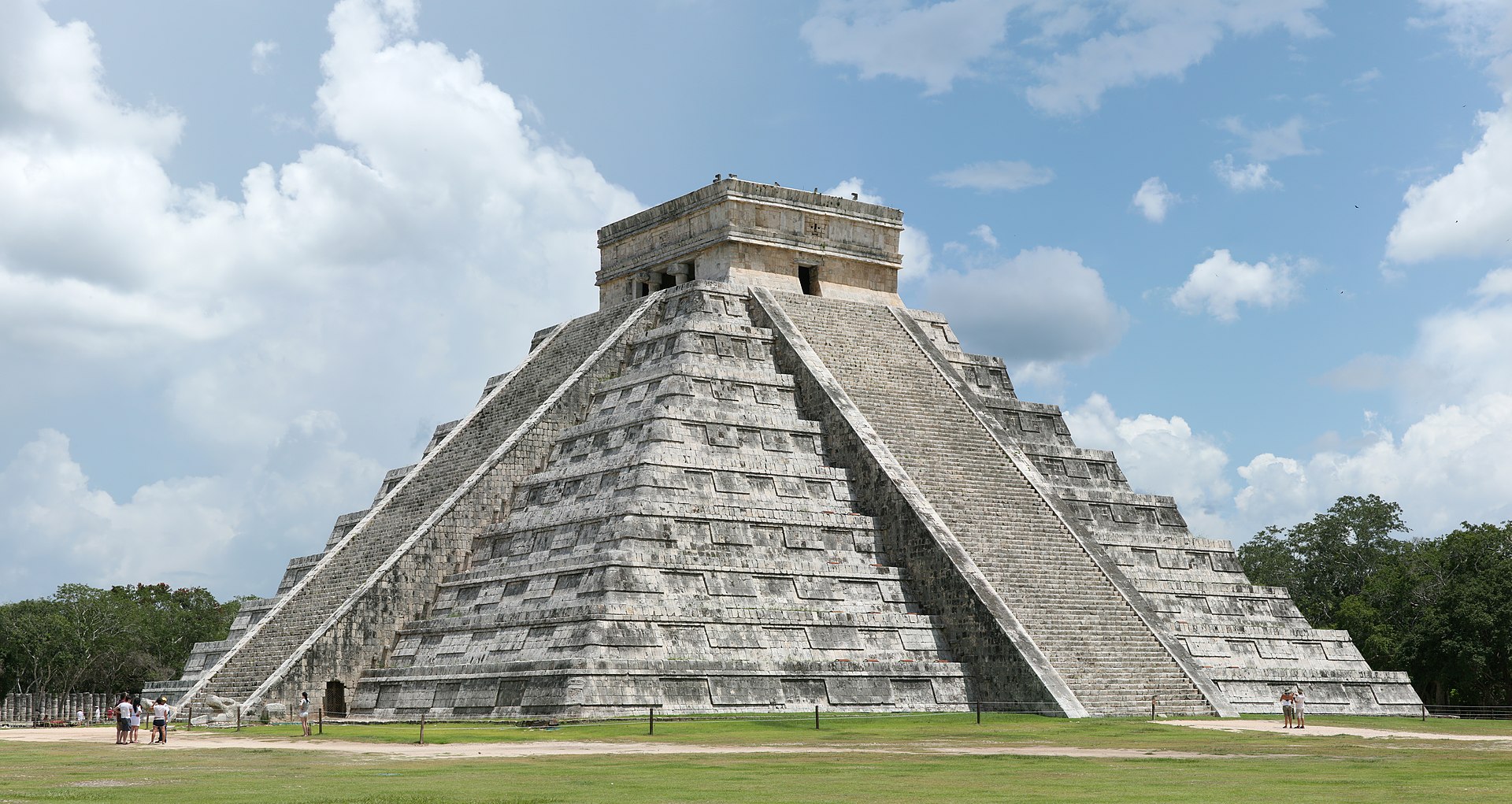
El Castillo (c.900–1100 CE) – 24m nine-step pyramid with 91 steps per stair plus top platform (365), dedicated to Kukulkan feathered serpent.
🇲🇽 Mexico · Pyramid
Period Bronze Age · Regional culture Pyramid-Variant
Hydraulic Reservoir Pyramid 103 — Mexico Region 7 in Mexico Region 7, Mexico is a Iron Age pyramid with stratified deposits and regional significance. Excavations reveal architectural phasing.
🇲🇽 Mexico · Ancient city
Classic–Epiclassic 350–900 CE · Northern Mesoamerican frontier
Northern hill fortress Salón de Columnas, 350–900 CE, Chicomóztoc candidate.
🇲🇽 Mexico · Archaeological wonder
Maya Late Classic 600–900 CE · Maya (Pomoná Pacbul?)
Hill-terraced Maya port with Palenque war record, 600–900 CE.
🇲🇽 Mexico · Archaeological wonder
Late Formative 1500 BCE–100 CE (Izapa style) · Mixe-Zoque? / early Maya (Izapan)
90 stelae with Popol Vuh genesis narrative, 1500 BCE–100 CE.
🇲🇽 Mexico · Archaeological wonder
Epiclassic Bajío 600–900 CE · Bajío Tradition (Northern frontier)
Hilltop city with 1,324 rock-carved building models, 600–900 CE.
🇲🇽 Mexico · Archaeological wonder
Maya Classic Late 600–800 CE · Maya (Moral-Reforma polity)
Twin Maya temples on San Pedro River, 300 BCE–900 CE.
🇲🇽 Mexico · Geoglyph
Medio period (Casas Grandes, 1060–1340 CE) · Mogollon–Paquimé (Casas Grandes)
60+ adobe and rubble geoglyphs (1060–1340 CE) surrounding the Mogollon city of Paquimé — acolyte owl and avenues.
🇲🇽 Mexico · Ancient city
Late Postclassic 1200–1550 CE (settlement from ~564 CE but walls/frescos 1200–1500) · Maya (Eastern coast, Postclassic International style, Chetumal polity, Mayapán confederacy)
Late Postclassic (1200–1550 CE) clifftop walled port with Caribbean panorama: 6 m limestone wall and pyramid Temple of the Frescoes with mural interiors, El Castillo (12 m pyramid with columns as…
🇲🇽 Mexico · Archaeological wonder
Postclassic 900–1521 CE (Mitla peak 1200–1520, Post-Monte Albán valley floor relocation) · Zapotec + Mixtec (Mixe-Zapotec, later Aztec tributary; Zapotec Lyobaa)
Postclassic Zapotec-Mixtec mortuary city and living palace center (900–1521 CE) abutting Monte Albán collapse population shift to valley floor: unparalleled geometric fret mosaic (grecas) facades…
🇲🇽 Mexico · Archaeological wonder
Classic Veracruz 100–1000 CE · Classic Veracruz (Remojadas-Early Gulf)
26-m earthen platform pyramid on Gulf coastal plain, 100–1000 CE.
🇲🇽 Mexico · Archaeological wonder
Late Classic Maya 600–850 CE · Maya (Talol kingdom)
146-m Acropolis with jaguar stucco frieze, 600–850 CE Maya city.
🇲🇽 Mexico · Temple complex
Classic Teotihuacan (150–250 CE core; 250–600 CE modifications) · Teotihuacano (Central Mexican)
Feathered Serpent Pyramid (c.150–250 CE) at Teotihuacan's Ciudadela – talud-tablero façade encrusted with alternating feathered serpent and fire-serpent (Xiuhcoatl) heads with war-serpent headdresses.
🇲🇽 Mexico · Archaeological wonder
Maya Classic Late 500–800 CE · Maya (Río Bec–Chenes transitional)
76-m Temple-Palace with painted 147 m² vault fresco, 500–800 CE.
🇲🇽 Mexico · Pyramid
Period Classical · Regional culture Pyramid-Variant
Geoglyph Panel Pyramid 115 — Mexico Region 7 in Mexico Region 7, Mexico is a Neolithic pyramid with stratified deposits and regional significance. Excavations reveal architectural phasing.
🇲🇽 Mexico · Archaeological wonder
Early Medieval (500–1000 CE) · Iron Age
Cederberg Stadsaal Sun Panel North in Oaxaca, Mexico is a Early Medieval (500–1000 CE) archaeological wonder attributed to Iron Age culture.
🇲🇽 Mexico · Archaeological wonder
Early Medieval (500–1000 CE) · Classical
Naqsh-e Rostam Relief Annex North in Oaxaca, Mexico is a Early Medieval (500–1000 CE) archaeological wonder attributed to Classical culture.