🇬🇹 Guatemala · Pyramid
Step Pyramid of Cross-Cliff
Moche (100–800 CE) · Moche
Step Pyramid of Cross-Cliff in Petén, Guatemala is a Moche (100–800 CE) pyramid attributed to Moche culture.
Search places, or jump to a section
The catalogue
3,927 places to sift through. Narrow by kind, country, period or how firmly each one is established — contested and pseudoarchaeological claims are labelled here, never hidden.
🇬🇹 Guatemala · Pyramid
Moche (100–800 CE) · Moche
Step Pyramid of Cross-Cliff in Petén, Guatemala is a Moche (100–800 CE) pyramid attributed to Moche culture.
🇮🇷 Iran · Tell
Iron Age II (1000–800 BCE) burned 800 BCE · Mannaean / Urartean–related Hasanlu
Tepe Hasanlu Level IVB — Burnt Citadel East Annex in West Azerbaijan Province, Iran is a Iron Age II (1000–800 BCE) burned 800 BCE tell attributed to Mannaean / Urartean–related Hasanlu.
🇹🇷 Turkey · Temple complex
Hellenistic to Roman (220 BCE – 300 CE) · Ionian Magnesians under Hermogenes
190 m stadium and palaestra 500 m east of Leukophryene Artemis temple.
🇮🇳 India · Temple complex
Gupta Classical Golden Age 320–550 CE · Brahminical Hindu (Vaishnava) with Jain retain
Gupta imperial rock-cut shrine cluster (4th–5th c. CE) on Vidisha sandstone ridge, 20 caves including Cave 5 — colossal 4 m monolithic Varaha (boar) avatar rescuing Bhudevi, symbolising Gupta king…
🇵🇪 Peru · Pyramid
Moche (Early Intermediate), c.100–750 CE · Moche (Mochica)
Huaca del Sol — largest adobe pyramid in the Americas, Moche capital platform (c.100–750 CE, Early Intermediate).
🇹🇷 Turkey · Tell
EBA → MBA → LBA → Phrygian → Persian (2600–500 BCE) · Anatolian EBA → Assyrian Colony fringe → Phrygian
EBA–Iron steppe tell (2600–500 BCE) — Haymana corridor walled town, Gordion-Hattusa buffer.
🇲🇳 Mongolia · Rock art
Upper Paleolithic to Mesolithic (19,000–8000 BCE) · Malta-Buret related early Holocene hunter
Sun-facing lower gallery with 15 ka ibex/ostrich ochre and pecked figures 220 m below main cave.
🇬🇧 United Kingdom · Megalith
Early Neolithic · Cotswold-Severn
Long barrow southeast of Avebury henge, 40 m, part of WHS barrow cemetery, c.3750 BCE.
🇲🇽 Mexico · Temple complex
Late Classic to Postclassic Maya (9th–12th c. CE; Toltec-Maya fusion) · Maya (Itza) with Toltec influence
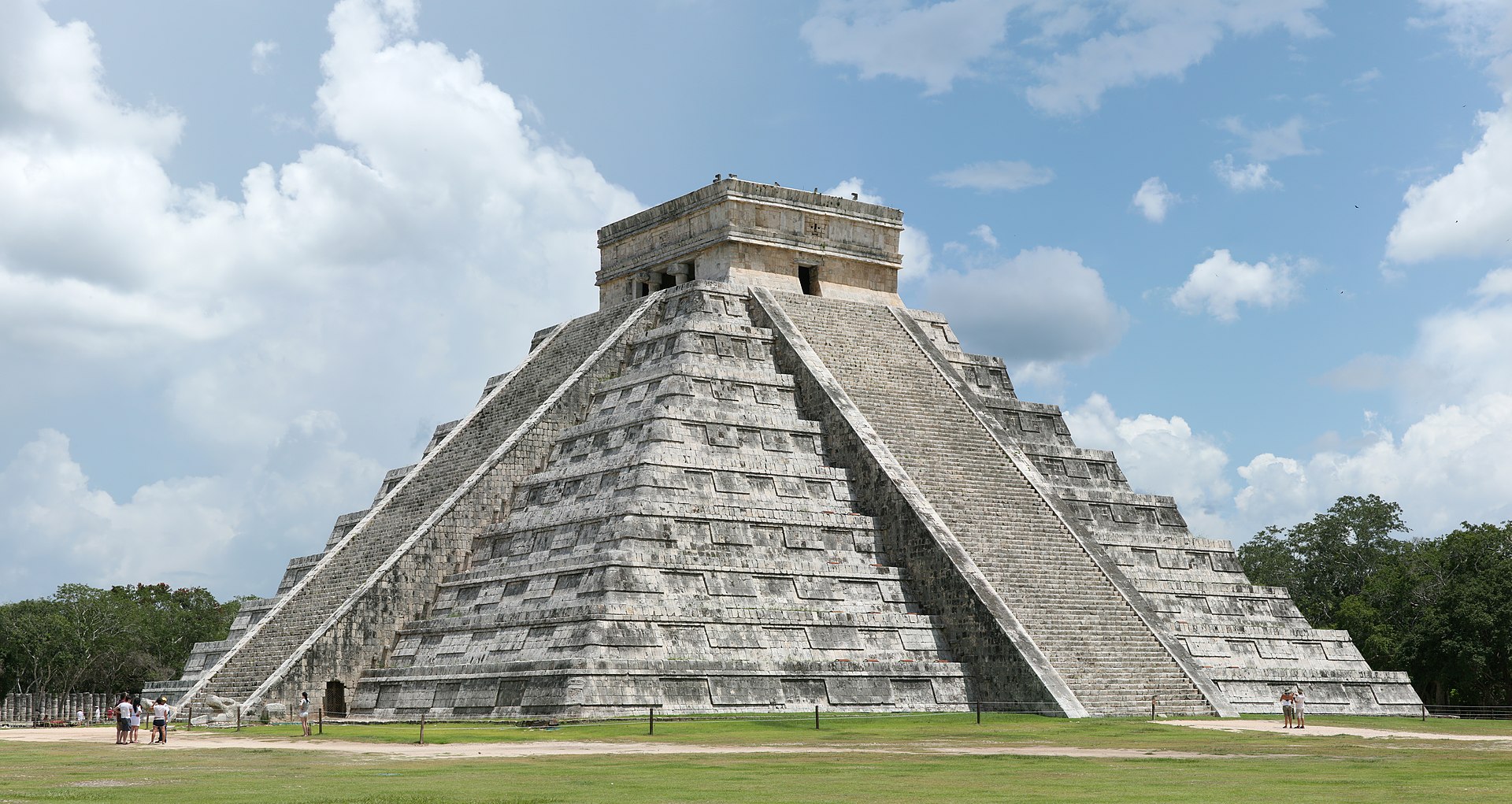
El Castillo (c.900–1100 CE) – 24m nine-step pyramid with 91 steps per stair plus top platform (365), dedicated to Kukulkan feathered serpent.
🇳🇦 Namibia · Rock art
Late Stone Age to early pastoral (6000 BCE – 1000 CE) · San hunter-gatherer (Ju/'hoansi ancestors)
Namibia's sole UNESCO World Heritage site besides Brandberg, Twyfelfontein holds over 2,500 engravings pecked into a 600-m sandstone outcrop of Etjo formation.
🇸🇾 Syria · Tell
Halaf late to Ubaid 4 (5200–3700 BCE; peak Ubaid 3 4500 BCE) · Halaf → Ubaid (Khabur facies)
Ubaid tripartite houses 4800 BCE — most intact Halaf-Ubaid transition cluster.
🇨🇱 Chile · Pyramid
Neolithic (6000–3000 BCE) · Neolithic
Lis Cairn Pyramid in Coquimbo, Chile is a Neolithic (6000–3000 BCE) pyramid attributed to Neolithic culture.
🇮🇳 India · Ancient village
Neolithic (3100–1500 BCE) then Megalithic · Kashmir Neolithic (Burzahom)
Burzahom — Pit Dwellings Extension Terrace in Jammu and Kashmir, India is a Neolithic (3100–1500 BCE) then Megalithic ancient-village attributed to Kashmir Neolithic (Burzahom).
🇸🇾 Syria · Tell
EBA to Late Roman (3100 BCE–400 CE; peak EBA 2700 BCE) · EBA Jazira (Khabur zone) → Amorite → Roman
EBA rounded-town south annex 2700 BCE — palace F quarter and Roman overlay.
🇦🇺 Australia · Buried city
Classical Antiquity (800 BCE–500 CE) · Iron Age
Gulf of Khambhat Wooden Anchor North in Bonaparte Shelf, Australia is a Classical Antiquity (800 BCE–500 CE) buried city attributed to Iron Age culture.
🇹🇷 Turkey · Temple complex
Period Neolithic · Regional culture Europe-Temple
Pyramid Outlier Europe 51 — Turkey Region 3 in Turkey Region 3, Turkey is a Neolithic temple-complex with stratified deposits and regional significance. Excavations reveal architectural phasing.
🇧🇬 Bulgaria · Buried city
Late Chalcolithic / Copper Age · Varna culture (Karanovo VI/Gumelnița)
Chalcolithic cemetery (4600–4200 BCE) with world's oldest worked gold hoard — 3,000 gold objects, 6.5 kg, in Grave 43 (status male with gold penis sheath) and 294 other graves, demonstrating earliest…
🇦🇫 Afghanistan · Ancient city
Hellenistic Seleucid–Graeco-Bactrian (300–145 BCE) · Seleucid–Graeco-Bactrian (Euthydemus)
Ai Khanoum — Hellenistic Lower Agora Extension in Takhar Province, Afghanistan is a Hellenistic Seleucid–Graeco-Bactrian (300–145 BCE) ancient-city attributed to Seleucid–Graeco-Bactrian (Euthydemus).
🇯🇴 Jordan · Tell
Iron to Nabataean (c.900 BCE–200 CE; peak Moab 900–600, Nabataean 100 BCE–100 CE) · Moabite → Nabataean → Roman
Lehun (Khirbat al-Lehun) is a Moabite hilltop fortress-citadel (1 ha) with casemate wall, extramural Iron II town (3 ha) and Nabataean temple platform on the Ke...
🇪🇬 Egypt · Buried city
Early Bronze Age (3000–2000 BCE) · Bronze Age
Khambhat Paleochannel Structure North in Alexandria Coast, Egypt is a Early Bronze Age (3000–2000 BCE) buried city attributed to Bronze Age culture.
🇪🇬 Egypt · Temple complex
Byzantine (4th–7th c. CE) · Byzantine Christian (Feiran is biblical Rephidim)
Marsa Alam Monastery? Actually Wadi Feiran — Sinai Oasis Monastery in South Sinai, Egypt is a Byzantine (4th–7th c. CE) temple-complex attributed to Byzantine Christian (Feiran is biblical Rephidim).
🇹🇷 Turkey · Temple complex
Archaic to Roman (700 BCE – 400 CE) · Karian–Ionian Iasians with Athenian attachment
Harbour hill temple atop agora overlooking double harbours and garum vats.
🇨🇳 China · Archaeological wonder
Ming Dynasty 1505 (Jiajing) rebuild over Northern Qi core · Ming Han Chinese
Best-preserved Ming Great Wall pass (1505) at 1,015 m Juyongguan defile north of Beijing, 7.8 m high crenellated brick-stone ramparts with 19 watchtowers, widened for five horses abreast and beacon…
🇹🇿 Tanzania · Rock art
Middle Stone Age / Later Stone Age · Middle Stone Age hunter-gatherers
60 m deep sequence from Acheulean bifaces to 30 ka ostrich-eggshell beads and 19 ka geometric microliths bridging Middle Stone Age–Neolithic. Rock paintings overlie MSA horizons.